International Childhood Cancer Day: Advancing Research in Childhood Cancers
February 15 2026
February 15 marks International Childhood Cancer Day, a global initiative to raise awareness of cancers affecting children and adolescents and to highlight research aimed at improving outcomes for young patients.
Although childhood cancers are rare, they remain one of the leading causes of disease-related death in children, underscoring the importance of continued research into the biological mechanisms that drive these diseases.
At the Rosalind and Morris Goodman Cancer Institute (GCI), researchers are addressing this challenge by studying rare childhood and adolescent cancers at their biological roots. In Professor Sidong Huang’s lab, graduate students are working to uncover why certain rare cancers arise and how their unique vulnerabilities might be targeted.
Last year, we highlighted the work of graduate student Hannah Hosein, whose research focused on DICER1 syndrome, a rare genetic condition that increases the risk of developing tumors in children and adolescents. While mutations in the DICER1 gene are known to cause this syndrome, how those mutations drive cancer development remains poorly understood. Hannah’s work aimed to close this gap by identifying the biological changes that lead healthy cells to become cancerous, knowledge that is essential for developing targeted therapies.
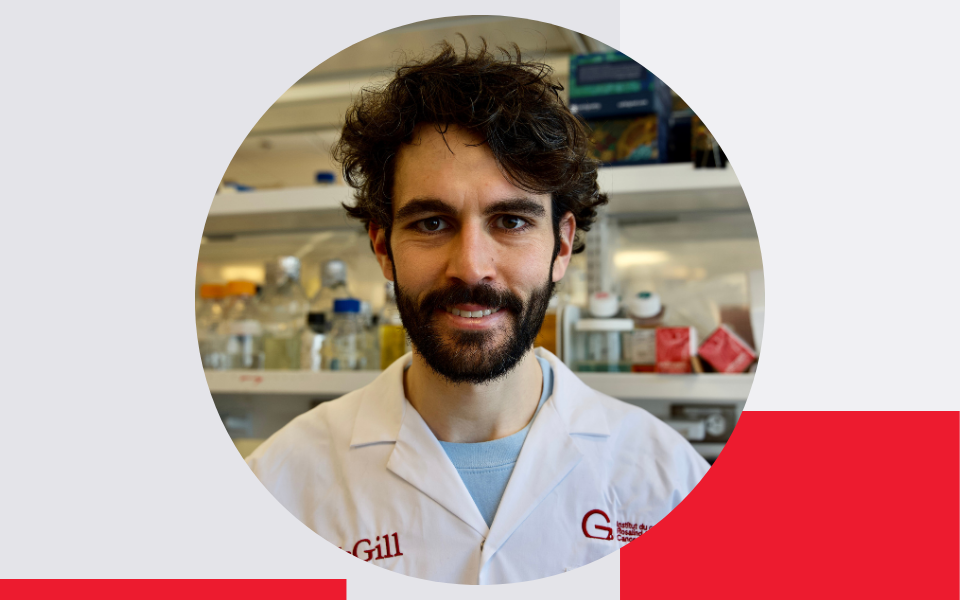
This year, the focus turns to another project in the lab, led by graduate student Giulio Aceto. His research focuses on small cell carcinoma of the ovary, hypercalcemic type (SCCOHT), an extremely rare and aggressive cancer that primarily affects woman predominantly in their childhood and young adulthood.
SCCOHT is driven by the loss of key genes that normally act as safeguards, helping cells control how and when genes are switched on. When these safeguards are lost, cancer cells grow rapidly and unpredictably. Giulio’s research has shown that, in the absence of these controls, SCCOHT cells become highly dependent on a single molecular system to sustain growth.
“In the absence of SMARCA4, cancer cells become dependent on p300, a chromatin-modifying enzyme that drives the expression of cell-cycle genes,” Giulio explains. “This dependency creates a vulnerability that can be exploited with targeted therapies.”
By identifying this vulnerability, Giulio’s work is helping to uncover new possibilities for targeted therapies designed to disrupt the specific mechanisms the cancer relies on to survive. For families affected by SCCOHT, this approach offers the possibility of treatments that are both more effective and potentially less harmful, an especially important consideration for young patients.
Research on rare childhood cancers presents significant scientific challenges. Small patient numbers and limited experimental models mean that progress depends on careful study of disease mechanisms and the development of precise research tools.
On International Childhood Cancer Day, we recognize the importance of cancer research and the contributions of trainees and researchers working to deepen our understanding of childhood cancers, with the goal of translating discovery into better outcomes for patients and families.
Giulios research is supported by the Emma Per Sempre Foundation, named in memory of Emma Ciani, and by the Rosalind and Morris Goodman Commemorative Studentship through the Morris & Rosalind Goodman Family Foundation.

Rosalind & Morris Goodman Cancer Institute all rights reserved • Privacy policy • Accessibility
Website by Riposte