Unlocking the Future of Breast Cancer Research : The Legacy and Impact of a GCI-Founded Breast Cancer Biobank
March 03 2026
On Triple Negative Breast Cancer (TNBC) Awareness Day, we pause to acknowledge both the challenges posed by this aggressive disease and the groundbreaking research being conducted here at the Rosalind & Morris Goodman Cancer Institute (GCI). The Breast Cancer Functional Genomics Group (BCFGG) is a research-grade tissue bank that has become a cornerstone of breast cancer discovery in Quebec and Canada.
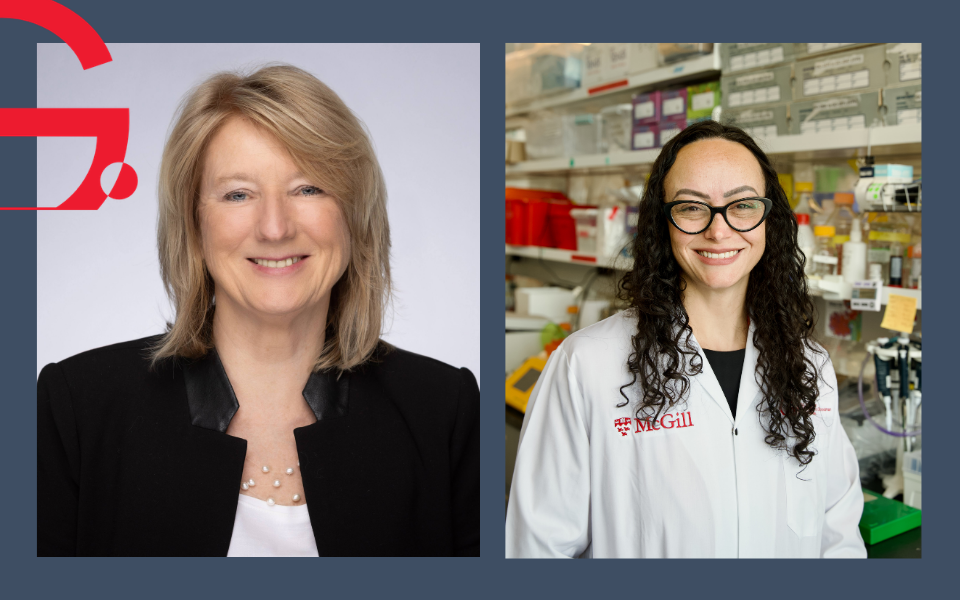
Led by Professor Morag Park, Ph.D., the BCFGG is far more than just a repository for patient samples; it is a dynamic engine for translational medicine. We reached out to Hellen Kuasne, Ph.D., manager of the biobank, to learn more about its impact, especially for triple negative breast cancer research.
A 25-Year Legacy of Discovery
Longevity is a rare currency in the fast-paced world of medical research. Established more than 25 years ago, the BCFGG has curated a collection of more than 2,400 samples, all linked to clinical data, drug responses, and patient outcomes.
While many biobanks offer a snapshot in time, the BCFGG provides a “feature film”. The added data on clinical outcomes, drug response and other clinical features provides a longitudinal depth that is uniquely powerful, allowing scientists to conduct robust survival analyses and identify the molecular signatures associated with long-term outcomes, late relapse, and disease progression.
“Many of the samples are associated with over one decade of clinical follow-up, enabling robust survival analyses and the identification of molecular features associated with longer-term outcomes, something that more recent collections cannot offer”, notes Hellen.
Pioneering Precision Medicine for TNBC
Triple negative breast cancer (TNBC) remains one of the most challenging subtypes to treat due to its lack of traditional receptors and its high propensity for metastasis. The BCFGG has positioned itself at the forefront of this battle by developing a unique resource of preclinical models. Preclinical models are experimental laboratory systems used to replicate human biology to test treatments and predict responses. The BCFGG collection includes 65 breast cancer patient-derived xenografts, 10 organoid systems, and 12 established cell lines.
These models are predominantly derived from TNBC, including therapy-resistant tumours and metastatic disease. Why does this matter? Patient-derived xenografts and organoids are increasingly essential because they accurately replicate the features of the original primary tumours, including how they respond to drugs. For example, the Park research group currently uses these models to study the mechanisms of drug resistance to standard-of-care chemotherapy and to newly approved Antibody-Drug-Conjugates compounds.
Mapping the Tumour Microenvironment
To have a better chance of beating cancer, we need to understand its neighbourhood. Over the last 20 years, the BCFGG has developed world-class expertise in molecular profiling. To date, over 600 breast cancer specimens have been molecularly characterized.
They are now using High-Definition Spatial Transcriptomics; cutting-edge technologies like Visium HD, Xenium, and GeoMx/CosMX, to map the tumour and immune microenvironment with never-seen before precision. By integrating whole-genomic sequencing (evaluated in 400 samples) with transcriptomic data, they are identifying new vulnerabilities of cancer than can be targeted by next-generation therapies.
A Collaborative Powerhouse
The success of BCFGG is built on a foundation of deep-rooted partnerships. Supported by the Quebec Breast Cancer Foundation, the FRQS Réseau de Recherche sur le Cancer (RRC), and integrated within the Canadian Tissue Repository Network (CTRNet), the biobank ensures that researchers across Canada have the biospecimens they need to impact patient care.
Managing such a massive operation requires a seamless interface between science and administration, which is where Hellen Kuasne comes in. Since 2021, she has coordinated the biobank activities with the McGill University Health Centre (MUHC) Biobank Platform and the GCI. This includes overseeing the ethical and regulatory frameworks, managing Material Transfer Agreements (MTAs), and ensuring that users have efficient access to high-quality decades. Collaborations with clinicians at the MUHC and Montreal Neurological Institute-Hospital also insures recruitment and sample acquisition.
Looking Ahead
As we honor Triple Negative Breast Cancer Day, the BCFGG remains committed to uncovering the secrets hidden within its 2,400+ samples. By focusing on rare subtypes and therapy-resistant diseases, they are not just collecting data, they are building the roadmap for the future of breast cancer treatment.

Rosalind & Morris Goodman Cancer Institute all rights reserved • Privacy policy • Accessibility
Website by Riposte