More Than Skin Deep: Understanding Melanoma Research with the Watson Lab
May 18 2026
May is Melanoma Awareness Month, a time to reflect on how far research has come, and how much further we need to take it.
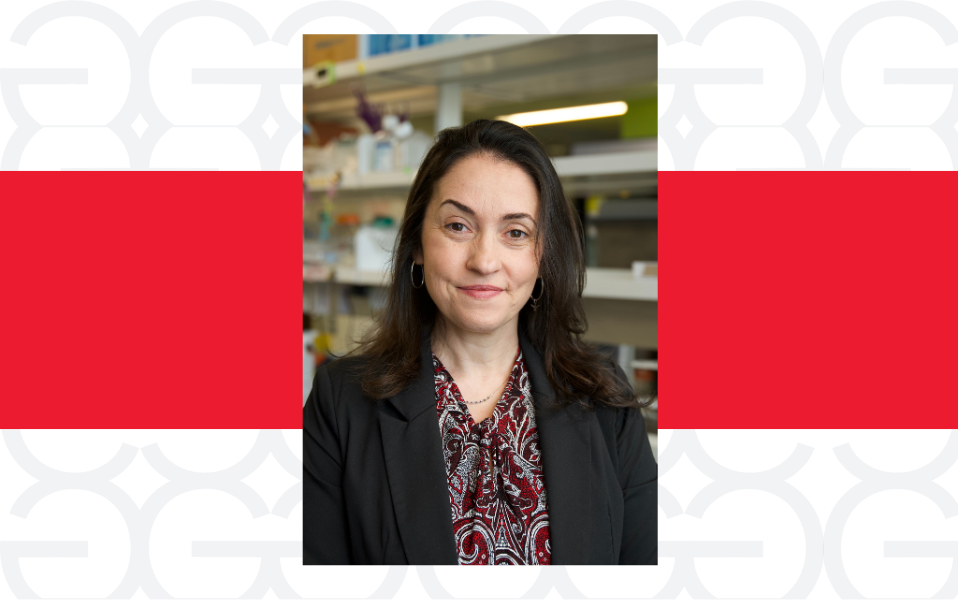
Melanoma is often dismissed as “just a skin cancer.” But according to researchers at the Rosalind & Morris Goodman Cancer Institute (GCI), that framing dangerously undersells the disease. “Melanoma is a complex and potentially aggressive disease that can affect people of all ages and backgrounds,” says Vanessa Pinatto Gaspar, PhD, research officer in Professor Ian Watson’s laboratory, where understanding melanoma biology is at the heart of the work.
The Watson lab research sits at the intersection of basic science and collaborative medicine. For Vanessa, who helps coordinate and connect projects across institutions and disciplines, no two days are the same, and that variety reflects just how wide-ranging melanoma research has become.
A field transformed
Ten years ago, the field looked very different. Today, researchers have a far more detailed understanding of how heterogeneous melanoma is, both genetically and biologically. This means that not all cells in a single melanoma tumour are the same, and they will not respond to treatments the same way. That diversity also directly shapes the way every patient responds to treatment.
“There has been major progress in understanding how melanoma interacts with its microenvironment and the immune system, which has reshaped how researchers think about therapy development and resistance,” Vanessa explains. Immunotherapies that were once experimental are now the standard of care for many patients, a testimony to what innovative research can achieve.
The Central Challenge: Resistance
Despite these advances, Vanessa cites what remains the biggest unanswered question in melanoma research today: How can we durably overcome therapy resistance?
“Understanding why some tumours respond long term while others relapse, and how to predict or prevent that resistance, remains a central challenge in the field,” she answers. This is one of the central research questions of the Watson lab. Their approach to this challenge is built on collaboration. Rather than pursuing isolated breakthroughs, the team contributes to a broader, cumulative body of knowledge. Vanessa’s role is centered on coordinating and supporting multiple research projects as well as connecting scientific expertise across institutions and disciplines to explore disease mechanisms and therapeutic vulnerabilities.
Reasons for Hope
Despite the continuous threat of skin cancer, what gives Vanessa hope? The pace of progress and the collective spirit of the scientific community.
“Advances over the past decade have already transformed outcomes for many patients, and the increasing integration of basic science, clinical research, and collaborative networks suggests that even more effective and personalized approaches are on the horizon.”
For the general public, the most important takeaways are familiar but worth repeating: early detection saves lives, and prevention matters. It is no coincidence that Melanoma Awareness Month arrives at the same time as the warmer season – we are reminded of disease prevention. But beyond prevention, awareness of melanoma’s complexity, and support for the research working to understand it, can make a lasting difference.
As Vanessa Pinatto Gaspar and the whole Watson lab’s work demonstrates, melanoma research is not a sprint. It is a long, collaborative effort committed to improving patients’ lives.
Learn more about the Watson lab’s work: Watson lab webpage
For more information on Melanoma, visit melanomacanada.ca

Rosalind & Morris Goodman Cancer Institute all rights reserved • Privacy policy • Accessibility
Website by Riposte