


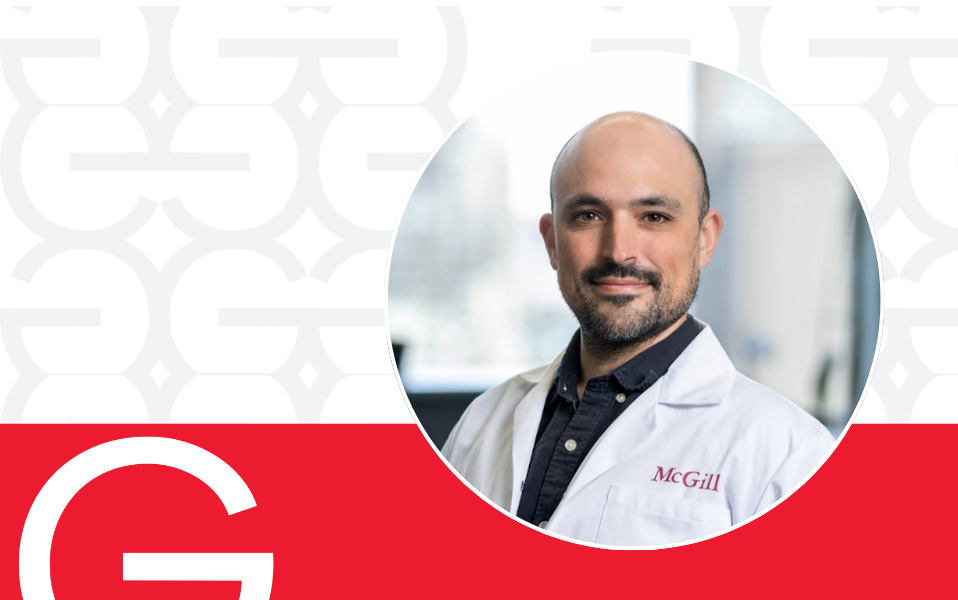
In a new Perspective in Cell Metabolism, Rosalind & Morris Goodman Cancer Institute (GCI) researchers Lawrence Kazak, PhD, and co-authors Mohammed Faiz Hussain, Mina Ersin, and Maria Delgado-Martin argue that heat production in adipose tissue is a team effort between parallel pathways.
For decades, the protein UCP1 has been seen as the defining mechanism of heat production, also known as thermogenesis. It lets protons leak across the mitochondrial membrane, releasing energy as heat rather than storing it as ATP. Yet, mice lacking UCP1 still produce heat, which led to the investigation of alternative mechanisms.
The article focuses on the futile creatine cycle (FCC). Professor Kazak and his team have been leaders in recent years in uncovering this UCP1-independent mechanism of thermogenesis, as well as its therapeutic potential. In the FCC, the enzymes CKB and TNAP continuously add and remove a phosphate on creatine, burning ATP and releasing heat in brown fat.
Genetic experiments show the two pathways, UCP1-dependent and FCC, operate in parallel. Mice lacking both UCP1 and FCC enzyme CKB in fat cells become severely cold intolerant, while losing either alone does not cause this phenomenon.
The authors also call for consistent standards of evidence across the field. Showing that a pathway consumes ATP is not enough. Pathways should be tested by targeted loss and rescue in vitro and in vivo, an approach that can be applied to other proposed cycles involving ATP and thermogenesis.
Studying the FCC has clinical relevance. Thermogenesis has potential as an alternative weight loss mechanism, and many components of the FCC have been linked to diseases such as pancreatic cancer cachexia and chronic kidney disease. Ultimately, the authors point to the challenges of integrating different fields to study thermogenesis and the possible interactions between thermogenic pathways, and how to convert these findings into better therapies for patients.
Read the full Perspective in Cell Metabolism: https://www.sciencedirect.com/science/article/pii/S1550413126004420?via%3Dihub


Rosalind & Morris Goodman Cancer Institute all rights reserved • Privacy policy • Accessibility
Website by Riposte
