Our events
Apr 15, 2026
From 11 AM to 12 PM
Location
Rosalind and Morris Goodman Cancer InstituteMontreal, QCCanada
ContactRosalind and Morris Goodman Cancer Institute
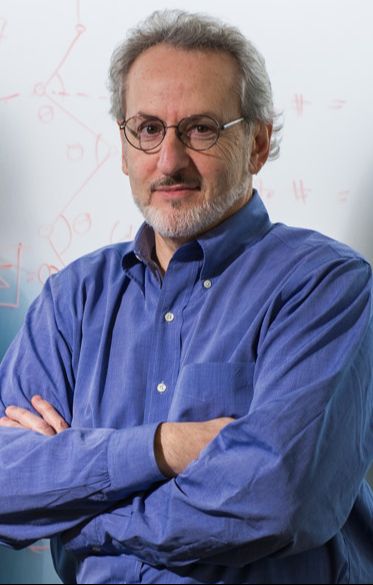
"Human Organ Chips for Disease Modeling, Drug Development, and Personalized Medicine" will be presented by Donald E. Ingber, MD, PhD, Founding Director of the Wyss Institute for Biologically Inspired Engineering at Harvard University, Judah Folkman Professor of Vascular Biology at Harvard Medical School and Boston Children’s Hospital, and Hansjörg Wyss Professor of Biologically Inspired Engineering at the Harvard's John A. Paulson School of Engineering and Applied Sciences.
GCI Frontiers in Cancer Research Lecture Series
Human Organ Chips for Disease Modeling, Drug Development, and Personalized Medicine
The Rosalind and Morris Goodman Cancer Institute Frontiers in Cancer Research Lecture Series is pleased to welcome Donald E. Ingber, MD, PhD., Founding Director of the Wyss Institute for Biologically Inspired Engineering at Harvard University, Judah Folkman Professor of Vascular Biology at Harvard Medical School and Boston Children’s Hospital, and Hansjörg Wyss Professor of Biologically Inspired Engineering at the Harvard's John A. Paulson School of Engineering and Applied Sciences.
The seminar will take place on Wednesday, April 15, 2026 at 11:00am in the GCI Karp Room 501.
Click here for Abstract
A major limitation in most studies on cancer and other human disease mechanisms is that they rely on data from experiments carried out in other species with different anatomy, physiology, and genetics. Drug discovery and development are also hindered by a reliance on preclinical animal models that frequently fail to predict drug efficacy and toxicities in clinical trials. My presentation will describe human Organ-on-a-chip (Organ Chip) microfluidic devices lined with living human cells that form tissue-tissue interfaces, reconstitute vascular perfusion and organotypic mechanical cues, integrate immune cells, contain living microbiome, and recapitulate human organ-level physiology and disease states with high fidelity. Work will be presented describing how single human Organ Chips and multi-organ human Body-on-Chips systems have been used to model complex diseases and rare genetic disorders, study host-microbiome interactions, recapitulate whole body inter-organ physiology, and reproduce human clinical responses to drugs, gene therapies, radiation, toxins, and infectious pathogens. Studies will be presented in which human Organ Chips have been used with CRISPR, siRNA, and chemical screens, as well as AI-enabled drug repurposing algorithms, to develop new therapeutics for pandemic respiratory viruses (e.g., influenza, SARS-CoV-2), cancer, and acute radiation syndrome as well as to assess the efficacy of gene and RNA therapeutic delivery vehicles (e.g., adenoviral vectors, LNPs). Organ Chips lined with living epithelial and stromal tissues from cancer patients also have been shown to be more effective at predicting patient-specific responses to administration of clinically relevant cancer chemotherapy regimens. In addition, human Organ Chip models of drug-induced liver injury have been experimentally confirmed to be significantly more accurate than animal models at predicting human toxicity responses. Based in part on these studies, the FDA recently announced that human Organ Chips will be one of the new approach methodologies that they hope to use to phase out animal testing over the next 3-5 years. Thus, the possibility that human Organ Chips can be used in lieu of animal models to gain insight into disease mechanisms, improve development of drugs, cell, and gene therapies, and serve as living avatars for personalized medicine, is coming ever closer to becoming a reality.
Click here for Bio
Donald E. Ingber, MD, PhD is the Founding Director of the Wyss Institute for Biologically Inspired Engineering at Harvard University, Judah Folkman Professor of Vascular Biology at Harvard Medical School and Boston Children’s Hospital, and Hansjörg Wyss Professor of Biologically Inspired Engineering at the Harvard's John A. Paulson School of Engineering and Applied Sciences. He received his B.A., M.A., M.Phil., M.D. and Ph.D. from Yale University. Ingber is a pioneer in the field of biologically inspired engineering, and at the Wyss Institute, he currently leads scientific and engineering teams that cross a broad range of disciplines to develop and commercialize breakthrough bioinspired technologies to advance healthcare and to improve sustainability. Ingber is a member of the National Academies of Medicine, Engineering, and Inventors, American Institute for Medical and Biological Engineering, and the American Academy of Arts and Sciences. He was named one of the Top 20 Translational Researchers world-wide in 2012, 2019, and 2020 and has received numerous other national and international honors. Ingber has made great strides in translating his innovations into commercial products and many are now either in clinical trials or currently being sold. One of his most recent breakthrough is the development of human Organ Chip microfluidic culture devices lined by living human cells that are being used to replace animal testing for drug development, disease modeling, and personalized medicine. His Organ Chip technology was named one of the Top 10 Emerging Technologies by the World Economic Forum and Design of the Year by the London Design Museum. It was also acquired by the Museum of Modern Art (MoMA) in New York City for its permanent design collection. Ingber also has authored more than 600 publications and almost 200 patents, and founded 8 companies, including Emulate Inc., the leading manufacturer of Organ Chip systems.

Rosalind & Morris Goodman Cancer Institute all rights reserved • Privacy policy • Accessibility
Website by Riposte