A Year in Review: Sixty years of discovery—and the next generation of scientific excellence at the GCI
December 22 2025
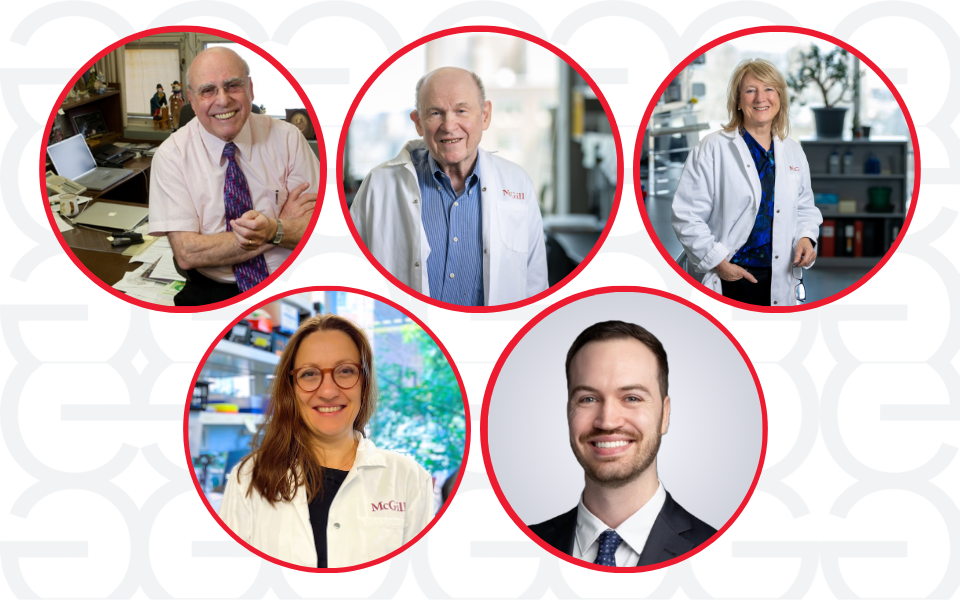
In 2025, the Rosalind and Morris Goodman Cancer Institute marked a major milestone in its scientific legacy, celebrating 60 years since the discovery of carcinoembryonic antigen (CEA) by its founding Director, Phil Gold, and honouring Morag Park with induction into the Canadian Medical Hall of Fame (CMHF).
Discovered in 1965, CEA was the first cancer biomarker identified in human blood, transforming how cancer is monitored and managed worldwide. Today, the CEA blood test remains a cornerstone of clinical care, an enduring example of how fundamental discovery can translate into lasting patient impact. Dr. Gold’s work helped establish the McGill Cancer Centre, now the GCI, as a place where bold ideas could reshape cancer medicine.
That legacy of discovery has continued across generations. Professor Park’s induction into the CMHF in 2025 makes her the third member of the GCI community to receive this national honour, following Dr. Gold and Nahum Sonenberg, who was inducted in 2023 for pioneering discoveries in RNA biology. Professor Sonenberg’s work reshaped our understanding of how cells control protein production and laid critical foundations for advances such as mRNA vaccines, while shaping generations of scientists.
Professor Park has spent more than three decades advancing our understanding of how cancers grow, spread, and respond to therapy. Her landmark research on the MET pathway and the tumour microenvironment continues to inform the development of next-generation cancer treatments, exemplifying the GCI’s sustained impact on the field.
As the GCI reflects on six decades of discovery, it is also looking forward, investing in the next generation of scientific leaders whose work is already shaping the future of cancer research and care.
Recruited to the GCI in 2024, Hannah Garner brings a strong record of high-impact discovery in cancer biology. In 2025, she received a highly competitive V Foundation Scholar Award, recognizing exceptional early-career investigators. Through a joint appointment with McGill’s Department of Microbiology and Immunology, her research focuses on how cancer cells communicate with their surrounding environment to drive metastatic disease, particularly in breast cancer. Her recent high-impact publication from postdoctoral work in Europe revealed how neutrophils transmit long-distance signals that promote metastasis, findings that continue to influence the field.
The GCI also welcomed Simon Roy, MD, MHS, in 2025 through a joint appointment with McGill’s Department of Pathology. A clinician-scientist bridging laboratory research and patient care, Dr. Roy focuses on aggressive and understudied cancers.
This year, he was named one of three recipients of the Marathon of Hope Cancer Centres Network Clinician Scientist Awards. His funded research aims to decode the spatial and circulating molecular landscape of acral melanoma, a rare and aggressive form of skin cancer, to better understand disease progression and treatment response.
Together, these milestones—from foundational discoveries to the recruitment and recognition of emerging leaders—tell the story of a research institute defined by sustained scientific excellence. At the GCI, discoveries made decades apart continue to shape the future of cancer research and care.

Rosalind & Morris Goodman Cancer Institute all rights reserved • Privacy policy • Accessibility
Website by Riposte